 Apparel and workwear
 Building supplies
 Medical supplies
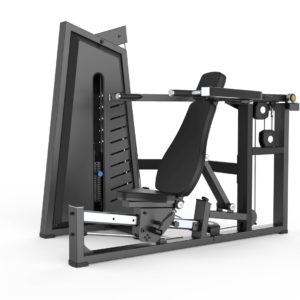 Fitness equipment
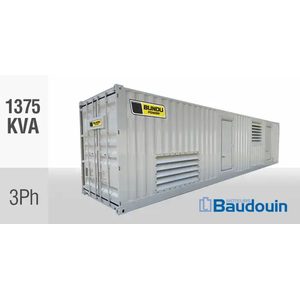 Energy and power
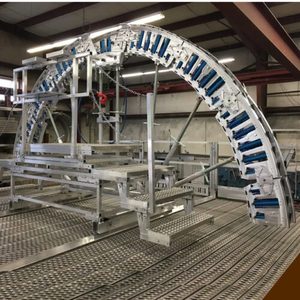 Industrial equipment
 Livestock supplies
 Mining supplies
 Stationery supplies
 Events and catering equipment
Two countries with opposite problems make a market. Ethiopia has more hydropower than its own grid can absorb; Djibouti has almost no generation of its own and already buys about 80 percent of its electricity from across the border. The Second Djibouti-Ethiopia interconnection is the wire that turns one country's surplus into another's supply - and into hard currency.
The Project: a Second Line, More Capacity
The new scheme, World Bank project P173763, centres on a 230-kilovolt Nagad-Galafi line spanning 292 km, of which 190 km runs on Djiboutian territory, with each circuit rated at 160 MW. It is designed to lift import capacity on the Djibouti side from the current 80 MW, stretchable to about 95 MW, toward 220 MW. The World Bank approved US$55 million of IDA credit for the Djibouti section in March 2022, against a total estimated cost of about US$138 million.
The first interconnector already proved the model; the second is an expansion, not an experiment. That distinction matters, because it means both governments are doubling down on a trade they have tested rather than betting on an untried link. The new line also adds a parallel path, so a fault on one circuit no longer threatens the bulk of a neighbour's supply - redundancy that turns a single point of failure into a network.
This is the first part of the article. The full article is on Cabanga Magazine, from the publishers of the regional business magazines in Africa.
Read the full article on Cabanga Magazine